 BizAcquire
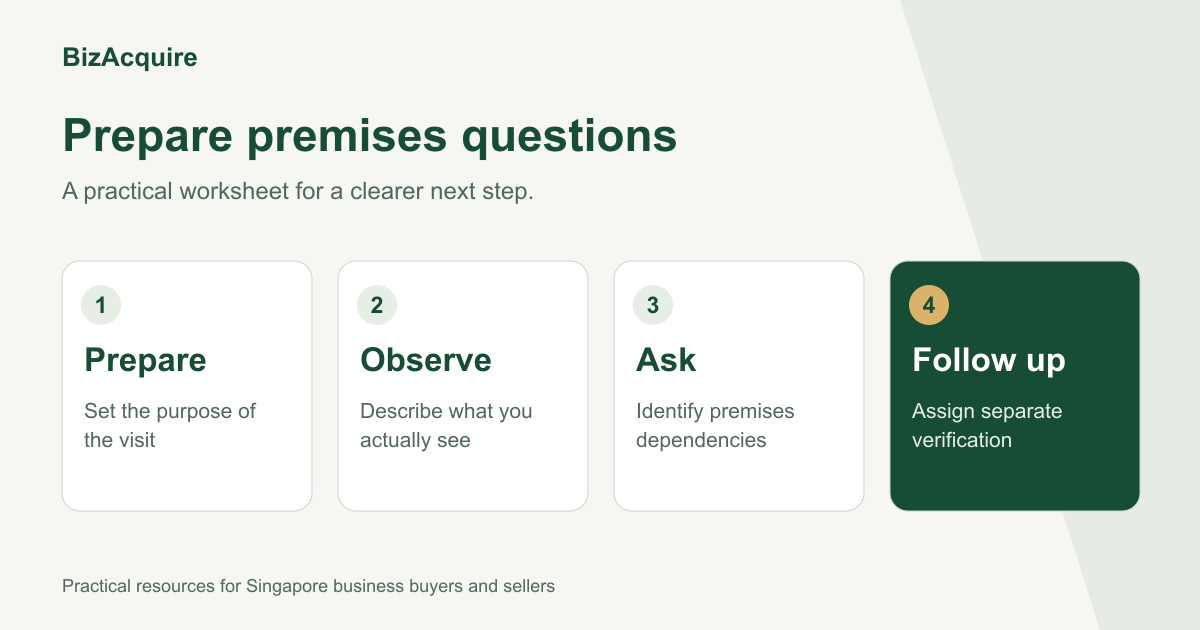
A site visit can show how an operation uses its premises. It cannot, by itself, establish the rights, consents or arrangements a buyer would need. Prepare the visit so observations lead to clear follow-up questions.
Choose what the visit should help you understand
Start with the operating questions: how work moves through the space, what equipment is used and where the operation might be constrained. Agree the visit’s scope and who will attend. Do not assume you have permission to photograph people, documents or restricted areas.
A visit during an unusual quiet or busy period may give a partial picture. Record when you attended and ask whether the activity was typical rather than treating a single observation as a trading record.
Separate observations from legal or technical conclusions
“Two preparation areas were visible” is an observation. “The layout satisfies every applicable requirement” is a conclusion that a casual visit does not establish. If a condition raises a concern, describe it and identify who should assess it.
- How does the current operation use each area?
- Which equipment or fittings are part of the proposed discussion?
- What maintenance or condition questions arose?
- Which premises arrangements need document review?
- Are any future operating changes being assumed?
Use a visit worksheet
| Field | What to write |
|---|---|
| Purpose and date | Question the visit was meant to address |
| Observation | Plain description without an unsupported conclusion |
| Seller explanation | What was said and by whom in their role |
| Separate check | Document, professional or authority question |
| Next action | Responsible person and follow-up date |
Avoid recording unnecessary customer or employee details. Keep any permitted photographs in an appropriate private location and label what they show, without claiming they prove more than they do.
Decide what needs resolving next
Fictional example: A buyer sees unused space and imagines adding another service. The next action is to investigate whether that proposed use is practical and what needs checking. The existence of spare space is not treated as permission or evidence of future income.
This guide does not state current lease, building, licensing or planning requirements. Check the actual documents and the relevant official sources or advisers for the proposed transaction and activity. Use the handover checklist and evaluation guide to place visit findings in the wider investigation.
Source and editorial notes
This checklist and worksheet are original practical guidance. No current legal, tax, accounting or regulatory requirement is stated here. Corrections or questions: contact BizAcquire.