 BizAcquire
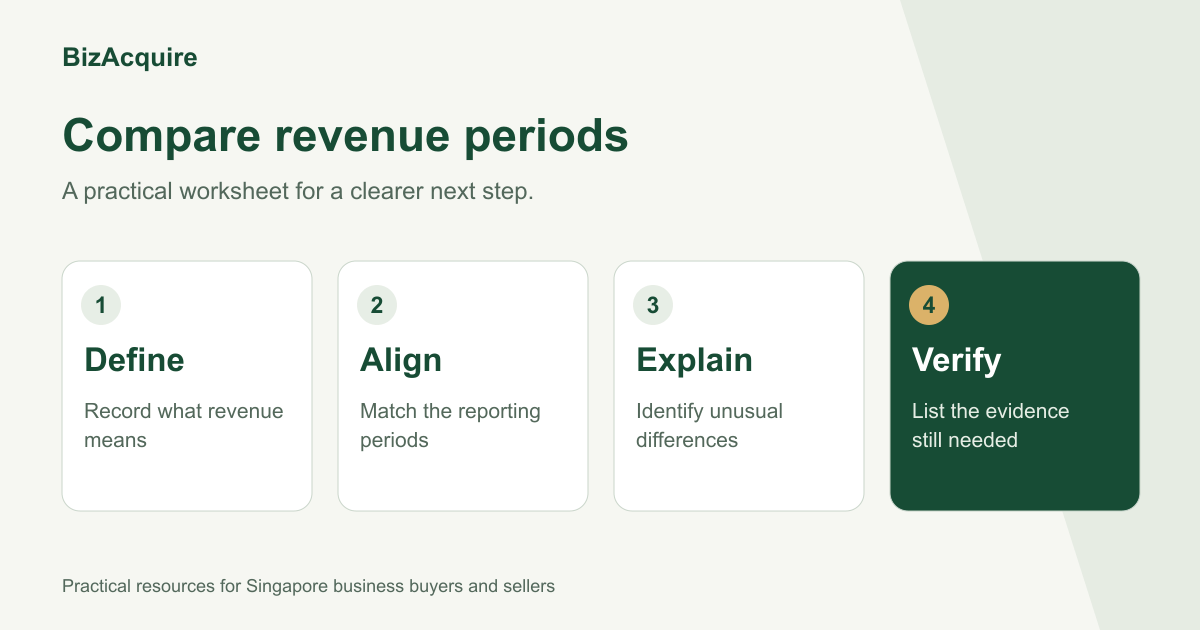
Two revenue figures can look comparable while describing different periods or measures. Before interpreting a change, establish what each figure covers and what evidence could support a like-for-like comparison.
Write down the definition first
Ask whether the number represents invoices issued, amounts collected, completed sales or another measure. These descriptions can refer to different activity. Do not silently substitute one for another in your notes.
Record whether the seller supplied an estimate or referred to a specific report. Keep the reporting basis alongside the number so a later discussion does not lose that context. This is a practical comparison exercise, not accounting advice.
Align the dates before discussing the movement
A completed year, a partial year and a single month are different reporting windows. Check the start and end dates and whether each window includes comparable trading days and business activities. Avoid presenting an annualised partial period as an actual annual result.
- What exact dates does each number cover?
- Is either period incomplete?
- Has the business changed its activities or reporting method?
- Are returns, cancellations or adjustments described consistently?
- Is a currency or unit different?
Use a comparison worksheet
| Field | Period A | Period B |
|---|---|---|
| Start and end dates | Record exact dates | Record exact dates |
| Definition and basis | What is counted? | Same definition or explain difference |
| Evidence named | Report and version | Report and version |
| Unusual items | Seller explanation | Seller explanation |
| Open question | Check required | Check required |
Leave an entry unknown when it is unknown. A blank cell can be mistaken for zero; write “not supplied” or “awaiting clarification” instead.
Keep explanations separate from conclusions
Fictional example: A buyer compares a completed twelve-month report with a seller’s eight-month update. Rather than conclude that revenue fell, the buyer asks for a matching eight-month comparison and clarifies whether the update uses the same definition. This example contains no market benchmark or actual listing figures.
Seller explanations identify what to investigate. They do not by themselves establish the cause of a change. Carry unresolved questions into your evidence request and use the document preparation checklist to organise what may be available.
Revenue is only one part of the operating picture. The asking-price guide explains why a price discussion needs scope and evidence beyond a headline figure.
Source and editorial notes
This checklist and worksheet are original practical guidance. No current legal, tax, accounting or regulatory requirement is stated here. Corrections or questions: contact BizAcquire.