 BizAcquire
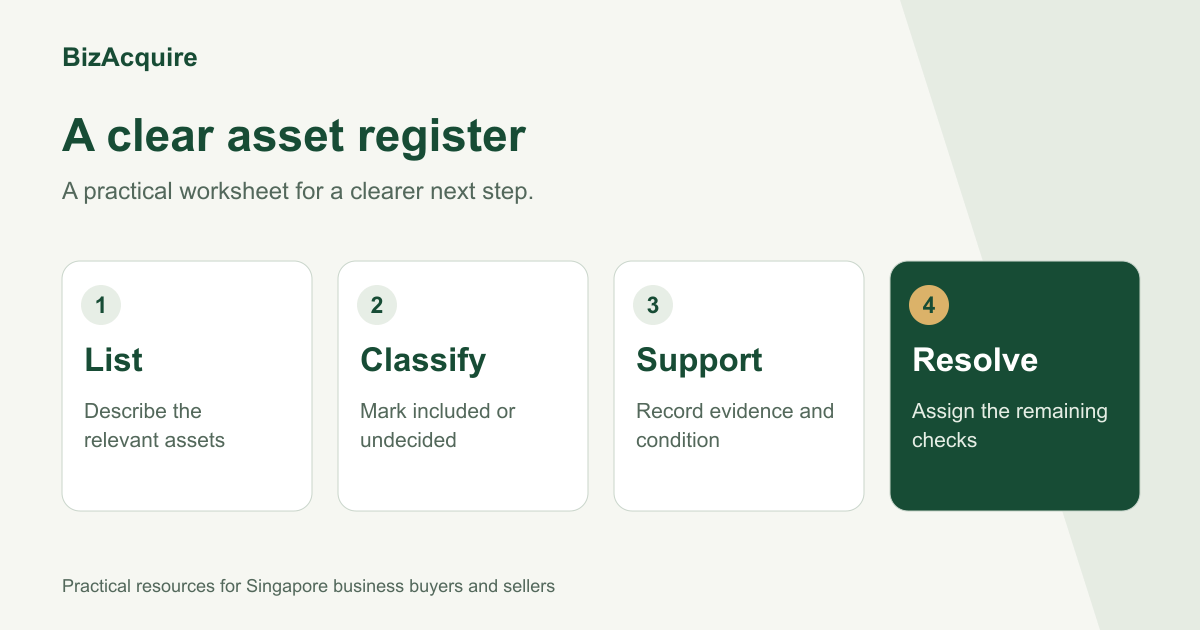
An asset register helps both sides discuss what is actually being offered. It is most useful when it distinguishes a description from evidence of ownership, condition and any proposed transfer arrangement.
Start with an intelligible description
Group similar items where that makes the list readable, but keep important assets identifiable in private supporting records. Equipment, stock, brand material and digital assets may need different kinds of questions. Avoid treating the broad phrase “everything included” as a usable inventory.
Record the location or internal reference needed to find an item without putting sensitive operational information in a public listing. The public summary and private register serve different purposes.
Separate the proposed scope from the checks
| Field | What to record |
|---|---|
| Description | What the item or group actually is |
| Proposed treatment | Included, excluded or undecided |
| Condition or limitation | What is known and what was observed |
| Evidence reference | Record available for later checking |
| Open question | Ownership, consent, access or scope issue |
| Action owner | Who will resolve the question |
A seller’s proposed inclusion is not the same as an independently checked right to transfer the item. Record the question and seek appropriate advice where needed; this worksheet does not determine the answer.
Reconcile the list with the price discussion
Fictional example: A summary mentions kitchen equipment, but the detailed list shows that one major item is used under a separate arrangement. Both sides record the exception and agree who will check it. The register prevents that uncertainty from being hidden inside a single price.
Date the register, record revisions and ask both sides to clarify differences before relying on it. Read the asking-price guide for the wider scope discussion and the handover checklist for later operational preparation.
Source and editorial notes
This checklist and worksheet are original practical guidance. No current legal, tax, accounting or regulatory requirement is stated here. Corrections or questions: contact BizAcquire.