 BizAcquire
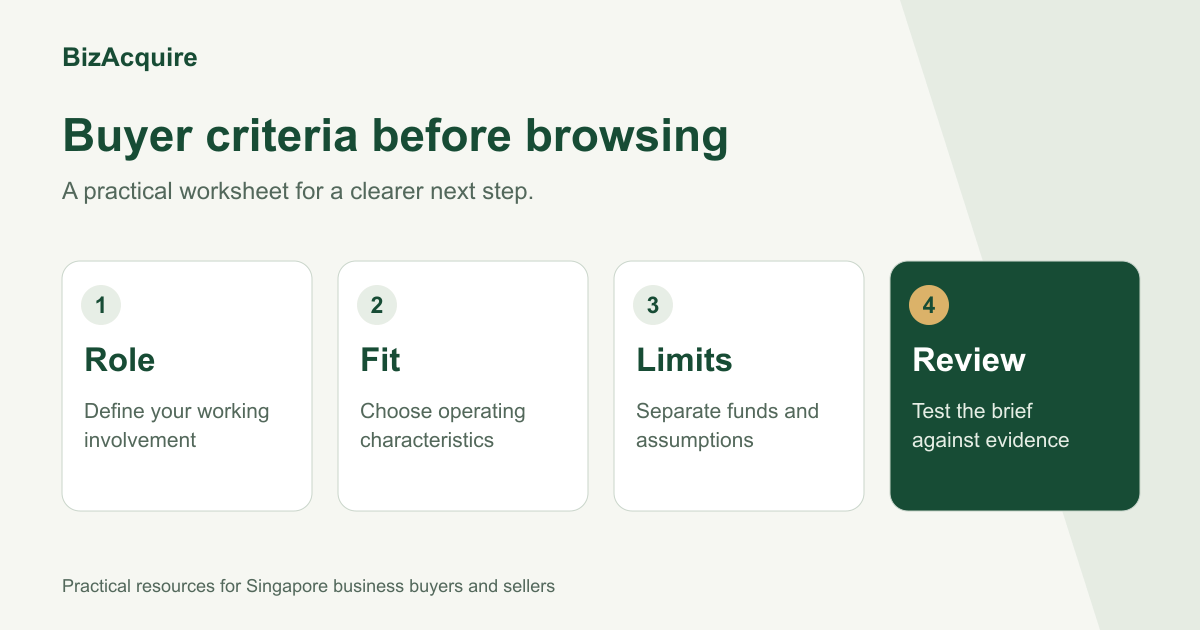
A promising listing can pull your attention toward whatever happens to be available. A buyer brief gives you a consistent starting point: what you could run, what you need to learn and which uncertainties would stop a discussion.
Start with the job you would actually do
Describe the working role you are prepared to take on. “Buy a profitable business” does not distinguish between running a customer-facing operation, supervising a small team and managing a specialist service. Consider your availability, experience and willingness to cover gaps during a transition.
- What work could I perform confidently from the first week?
- Which capabilities would I need to hire or learn?
- How much owner involvement can I sustain?
- What location or opening-hour limits would make the operation impractical?
Separate requirements from preferences
Keep a short set of essential criteria and a separate list of preferences. A preferred sector is different from a requirement that the business can operate without your physical presence every day. Avoid adding a long wish list that no seller could meaningfully answer.
For each essential condition, write the question that would test it. If you need a manager-led operation, ask who makes daily decisions and what happens when the owner is unavailable. Treat the answer as a statement to verify, not a guarantee.
Write down the budget assumptions
Distinguish funds available for a purchase from amounts set aside for advice, working capital and operational changes. Record financing that is still uncertain as an assumption. This worksheet does not establish affordability or recommend a financing product.
| Field | Your entry |
|---|---|
| Purchase funds available | Amount and when it is available |
| Other costs to investigate | Advice, transition and operating needs |
| Funding assumption | What is not yet arranged |
| Decision limit | What must be clarified before proceeding |
Use the brief to choose the next conversation
Fictional example: A buyer prefers a retail business but cannot work regular weekends. The useful question is not whether the shop is attractive. It is how weekend coverage works, who supervises it and what the buyer would need to change. The brief exposes that operating issue early.
Keep a dated version and revise it when evidence changes your understanding. A change is useful when you can explain its reason; silently relaxing every condition makes the brief less helpful.
Use the business evaluation guide for the wider investigation, then take your priority questions to a first buyer–seller call.
Source and editorial notes
This checklist and worksheet are original practical guidance. No current legal, tax, accounting or regulatory requirement is stated here. Corrections or questions: contact BizAcquire.