 BizAcquire
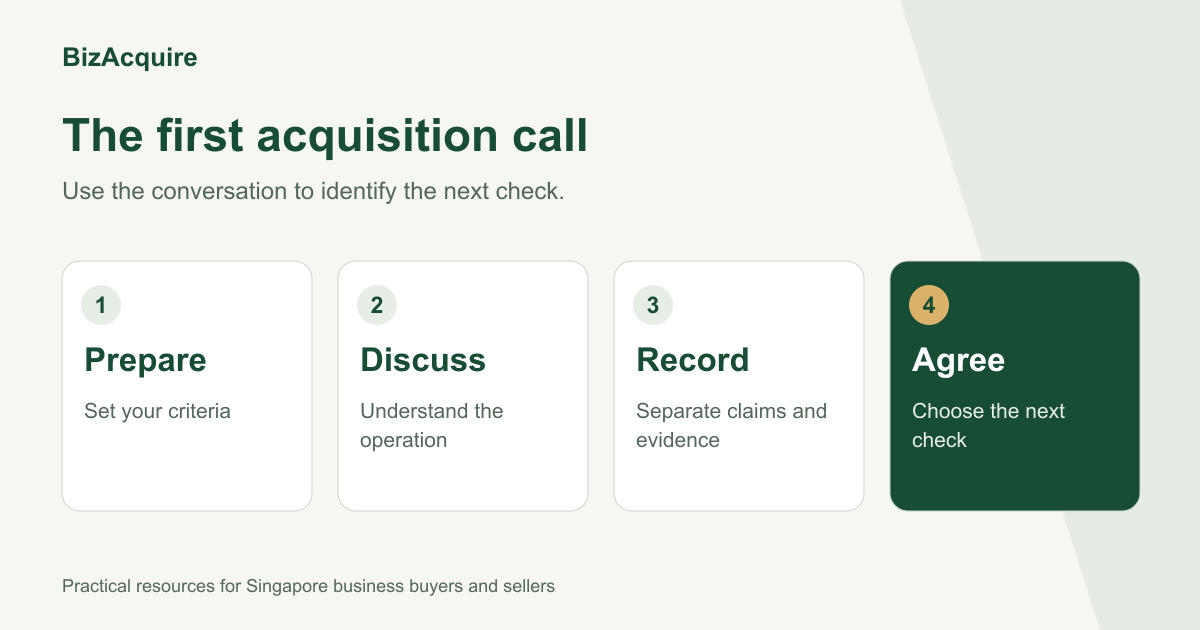
The first conversation about buying a business should help both sides decide whether a more detailed discussion is worthwhile. A short agenda keeps it useful without turning an introductory call into a document dump or a price negotiation.
1. Prepare a short brief before the call
As a buyer, write down the type of business you can operate, the time you can commit and the limits of your budget. Separate the amount available for a purchase from the funds you may need for advice, working capital and improvements. Avoid quoting a budget that depends on financing you have not arranged.
As a seller, prepare a consistent description of what the business does and why you are considering a sale. Decide what you can discuss at this stage and what needs a later, controlled conversation. Review your public listing so the call does not introduce unexplained differences in scope or figures.
- Agree who will join and their role in the decision.
- Choose a practical call length and share the main questions in advance.
- Have the listing or summary available, including its date.
- Identify anything you cannot answer yet and say so clearly.
2. Start with how the business actually operates
Ask the seller to explain an ordinary working week. A business description such as “recurring services” tells you less than a clear account of how work arrives, who delivers it and how the owner handles problems.
- What products or services generate most of the activity?
- Which tasks does the owner personally handle?
- Who manages daily operations when the owner is away?
- Why is the owner considering a sale, and what timing would work?
- What would be difficult for a new owner to learn or replace?
The aim is to understand the operating model. Save detailed verification for the next stage, using the wider business evaluation guide to organise that work.
3. Clarify what the asking price refers to
Before discussing whether a price seems reasonable, establish what is being offered. Ask whether the proposed transaction concerns shares, selected assets or another arrangement. If either party is unsure, record that uncertainty for a qualified adviser rather than assuming the structures have the same consequences.
- What equipment, stock, brand rights or other assets are intended to be included?
- Are cash, debts, deposits or outstanding customer commitments part of the proposed arrangement?
- What support is the seller willing to discuss after completion?
- Which items are still open for negotiation?
An asking price is a starting point for discussion. Our guide to understanding business asking prices explains how inclusions and the evidence behind figures affect comparisons. This call should not be treated as a valuation or an instruction to pay a deposit.
4. Separate the figures from the evidence
If revenue or profit is discussed, ask which period it covers and what the figure includes. A monthly estimate, a historical average and the latest completed month can describe different operating pictures.
- Which period does the figure relate to?
- Is it an estimate or taken from a specified record?
- What owner remuneration or unusual costs need explaining?
- What evidence could be made available later, and under what arrangements?
Record the answer as a seller statement until the relevant evidence has been checked. “Records available” does not establish their accuracy. For later preparation, use the sale preparation document checklist rather than trying to collect everything on the first call.
5. Identify what depends on someone else
Ask which important parts of the operation rely on the owner, a landlord, a key customer, a supplier or a licensed activity. Do not assume a relationship or permission will continue simply because it exists today.
- Which relationships are managed personally by the owner?
- Are there key premises, contracts or systems whose continuation needs checking?
- Who should verify any required consent, eligibility or regulatory step?
- What could prevent the proposed timetable from working?
Keep legal and regulatory conclusions out of the introductory notes unless a qualified adviser has established them for the actual transaction. List the question, the evidence needed and who will resolve it.
7. Use a simple call worksheet
Copy these fields into your own notes. Keep the notes private and record unknowns explicitly.
| Field | What to record |
|---|---|
| Operating fit | What the owner does and what the buyer could realistically take on. |
| Proposed scope | Items discussed as included, excluded or still undecided. |
| Financial statement | The figure, period, definition and evidence still required. |
| Key dependency | A relationship, consent or operational issue needing a separate check. |
| Next action | One named owner, one specific check and an agreed follow-up date. |
| Decision | Continue, pause for clarification or stop, with a short reason. |
Fictional example: A buyer hears that “the owner only works a few hours.” Instead of treating that as established, the notes say: “Seller statement: limited weekly involvement. Next check: ask for a task breakdown and understand who handles customer problems.” This is an illustration, not a BizAcquire listing or completed deal.
8. End with one clear next step
Summarise what each side understood, what remains uncertain and whether another conversation is useful. A sensible next step might be clarifying the sale scope, agreeing a limited evidence request or arranging advice. Pausing is a valid outcome when the operating fit or information quality is unclear.
Once the business identity is appropriately disclosed, ACRA’s guide to buying business information explains its information products and verification options. These records can support an identity check; they do not replace financial or operational diligence.
If you continue, keep an action log and revisit unresolved questions before making commitments. The business handover checklist can help frame later operational questions. You can also browse Singapore business opportunities or learn how to prepare a seller submission.
Source and editorial notes
- ACRA: Buying business information · Checked 5 November 2026
Sources support the specific statements alongside them. The practical agenda and worksheet are BizAcquire’s original editorial guidance. Corrections or questions: contact BizAcquire.